EM Kit
Creator & Solo Developer
2025 — present
10+ modules · AI-powered · launching soon
The problem
Engineering managers live in too many tools. Roster in a spreadsheet, 1:1 notes in a doc, sprints in Jira, incidents in Slack, reviews in whatever HR bought. None of it talks to the rest, and none of it is built for the actual job.
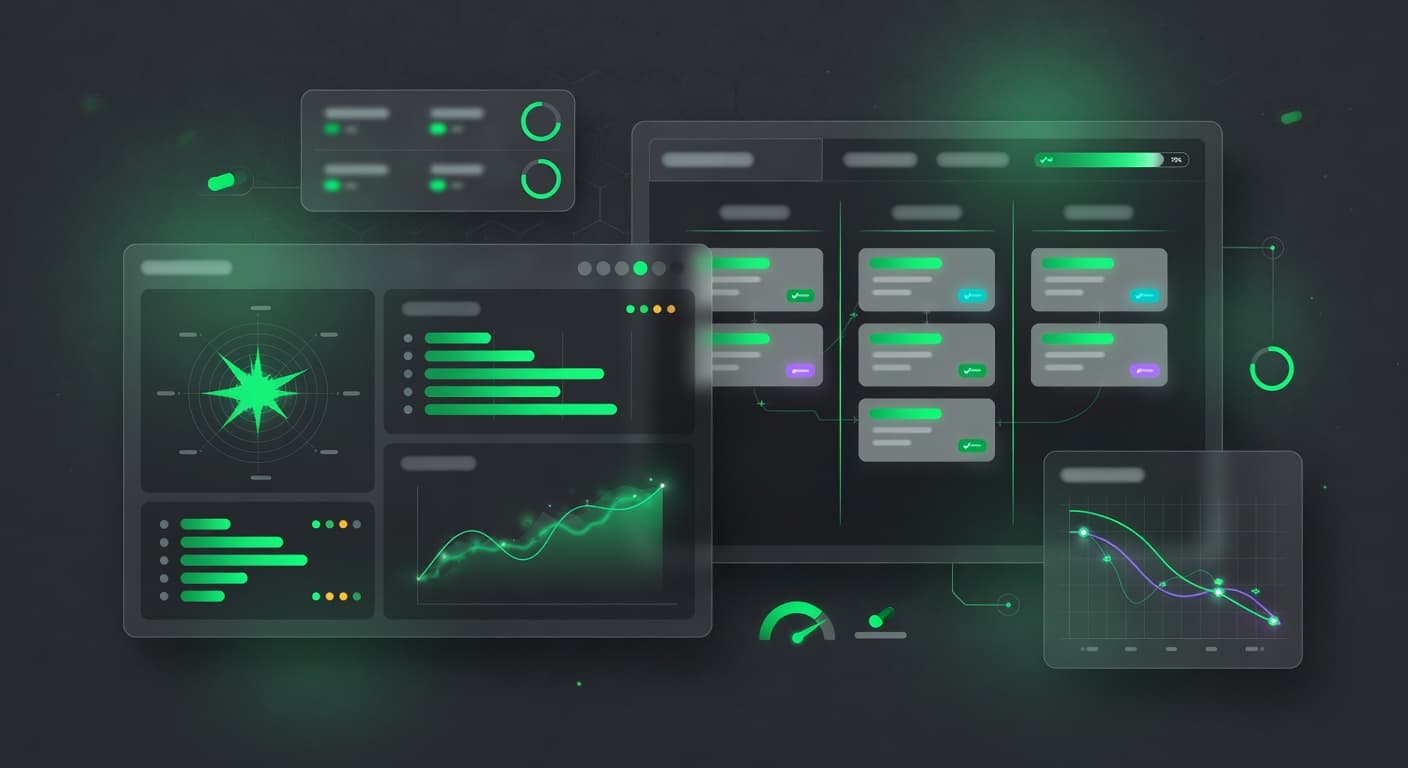
EM Kit is one app for that job. Team health, 1:1s, sprints, incidents, reviews, DORA, product maps. The AI bits only run where they have that context.
What's built
The SaaS is built and running. More than 10 modules: roster with health scores and flight-risk flags, structured 1:1s with talking points from recent work, sprint tracking, incidents, reviews with a first-draft narrative, action items, weekly reports from that week's data, CS escalations, product health, DORA, and product maps on an SVG canvas.
Marketing site on the homelab next to the app. Blog. Demo mode. Stripe. Waitlist. Terms. Cmd+K search. Email and Google auth. Deploys go through a self-hosted GitHub Actions runner on Proxmox.
AI features
Six workflows on xAI Grok: 1:1 talking points from sprint data and open actions, weekly report drafts, action items from notes, team pulse, review narratives, flight risk.
Next up is image import for product maps. Screenshot a whiteboard or a diagram. Grok Vision turns it into nodes and edges that can point at incidents, sprints, and DORA. That link back into live data is the part I care about. A pretty map by itself is not the product.
Architecture
Next.js 16 App Router. Server components where they help. Drizzle on PostgreSQL. NextAuth with passwords and Google. Stripe webhooks for billing.
Modules stay behind their own boundaries. CI is a Proxmox runner and Playwright on 35+ routes. A PR builds, tests, SSHs to prod, restarts PM2.
Product maps
Interactive SVG canvases. Services, dependencies, who owns what, how healthy it looks. A node can point at incidents, sprint data, DORA.
I want real-time co-editing later. I already did that kind of work at Shipcode. Maps stay inside EM Kit so the ops data is native, not an export.
Business model
No free tier. 14-day trial, card up front. Pro is $80/year for a manager, 5 teammates, 1 map. Max is $150/year for unlimited teammates, live collab, and the AI features. Enterprise per-seat comes later.
First 1,000 users keep their price. Target is $80k ARR at 1,000 users.
What's next
Final QA, then launch. After that: sidebar, image import, live collab, teammate logins. The manager pays. Sensitive stuff stays behind permissions. Rivet does most of the build: architecture in Opus, code in Grok, check back in Opus.